
Choose a walking frame when walking is unsteady, balance is poor or the doctor has advised taking weight off a leg, and the person has little strength in their arms. Elbow crutches suit someone with good balance and strong arms who needs to take weight off a leg. A walking stick is enough for mild pain in one leg. Set any aid so that the elbow is bent by about 15–30 degrees.
Below you will find a comparison table, tips on setting the height, rules for walking with a stick, warning signs and information on funding.
In brief
- The handle of a walking frame, crutch or stick should be at wrist height with the arm hanging loosely, and the elbow bent by approx. 15–30°.
- A walking stick is held in the hand opposite the painful or weaker leg.
- A physiotherapy consultation costs 180 PLN; choosing and fitting an aid at home within 15 km of Rydułtowy: approx. approx. 200 PLN within 5 km, then + PLN 2/km.
- The clinic is open Mon–Fri 7:00–20:00, private visits only (not covered by NFZ, the Polish public health fund).
Contents
How do a walking frame, crutches and a walking stick differ?
They differ in how much support they give and how much they demand of the user. A walking frame has the widest base and gives the greatest stability, but it slows walking down and makes stairs difficult. Crutches allow you to take a lot of weight off a leg, but they require arm strength, coordination and good balance. A walking stick gives the least support, but it is the most convenient at home and outdoors.
| Criterion | Walking frame | Elbow crutches | Walking stick |
|---|---|---|---|
| Stability | greatest | medium | least (tripod and quad sticks – greater) |
| Taking weight off the leg | considerable | considerable, including full non-weight-bearing | slight |
| Requirements | little arm strength, slow walking | arm strength, coordination, balance | one good hand, good balance |
| Typical situation | poor balance, after a hip fracture, after a hospital stay | after surgery or a leg injury in a fit person | mild knee or hip pain, slight unsteadiness when walking |
| Stairs | no | yes, after learning the technique | yes |
When to choose a walking frame, crutches or a walking stick?
A walking frame is usually chosen for poor balance, after falls, after a fracture of the neck of the femur and for people weakened after a hospital stay. Crutches are a good solution after knee or ankle surgery or after a joint replacement, when the person has strong arms. A walking stick helps with mild pain in one leg, when balance is good and walking is only slightly unsteady.
The aid often changes during rehabilitation: after a hip fracture the patient starts with a walking frame, then moves on to crutches and finally to a walking stick. We describe this stage in our post on rehabilitation after a fracture of the neck of the femur.
How to set the height of a walking frame, crutches and a stick?
Stand up straight in the shoes you wear every day, with your arms hanging loosely. The handle of the walking frame, crutch or stick should be level with the crease of your wrist. When you hold the handle, your elbow should be slightly bent, by about 15–30 degrees. With elbow crutches, the cuff should wrap around the forearm a few centimetres below the elbow.
An aid that is too high lifts the shoulder and tires the arm; one that is too low forces you to lean forward, which increases the risk of falling. Also check the rubber tips – worn or cracked ones need replacing, as they slip on a wet floor.
Which hand should you hold a walking stick in and how do you walk with it?
Hold the walking stick in the hand opposite the painful or weaker leg – so with pain in the right knee, in the left hand. The stick and the affected leg move forward together, and the healthy leg takes the second step. This mirrors the natural arm swing when walking and shifts some of the weight from the painful leg to the arm.
On stairs there is a simple rule: going up, the healthy leg goes first; going down, the affected leg goes first together with the stick.
When should you see a doctor first?
Before you buy an aid, see a doctor if the difficulty walking came on suddenly or is accompanied by weakness in an arm or leg, speech problems or a drooping corner of the mouth. Hip pain or being unable to put weight on a leg after a fall, repeated falls, dizziness and fainting, and a swollen, painful calf also need urgent assessment.
If there are signs of a stroke, call 112. A walking frame alone will not solve a problem whose cause nobody has investigated.
Can you get a walking aid with NFZ funding?
Crutches, walking sticks and walking frames are medical devices which in Poland the NFZ may partly reimburse on the basis of an order issued by an authorised doctor or another authorised specialist . The amount of the subsidy, the period of use and the rules for fulfilling the order depend on current regulations, so it is worth asking your doctor about them.
The “W zdrowym ciele” clinic sees private patients only and does not issue NFZ orders .
How does a physiotherapist help you choose an aid?
The physiotherapist assesses strength, balance and the way the person walks, checks the doctor’s recommendations on weight-bearing and, on that basis, suggests the type of aid. They set its height and teach safe walking, including on stairs and over thresholds. The aid is best chosen in the person’s own home, on their own floors and stairs and in narrow passages.
Home physiotherapychoosing and adjusting the aid, gait training in the person's home, up to 15 km from Rydułtowyapprox. PLN 200 within 5 km, then + PLN 2/km; the exact price is agreed when bookingPrices valid from 08.2026. The physiotherapist decides on the number of visits individually. A walking aid is only one part of fall prevention – it is worth combining it with the exercises described in our post falls in older people – balance exercises.
Good to know: before you buy an aid, measure the width of the doors and passages in the home – a walking frame that is too wide will not fit into the bathroom.
Summary
A walking frame gives the most support, crutches let a person with strong arms take weight off a leg, and a walking stick is enough for mild pain in one leg. Set the handle at wrist height, hold the stick in the hand opposite the affected leg, and if walking suddenly becomes difficult, see a doctor first.
Frequently asked questions
A walking frame with or without wheels?
A frame without wheels, lifted with each step, gives the greatest stability and is usually chosen for poor balance or after a hip fracture. A four-wheeled walker (rollator) with brakes and a seat lets you walk faster and further, but you need to be able to operate the brakes reliably. It is worth discussing the choice with a physiotherapist.
How do you use crutches on stairs?
Going up, you step with the healthy leg first, then bring the crutches up together with the operated leg. Going down, the crutches and the operated leg go first and the healthy leg last. If there is a handrail, hold it with one hand and take both crutches in the other. Always make your first attempts with another person or a physiotherapist standing by to support you.
Is a tripod walking stick better than an ordinary one?
A tripod or quad stick stands on its own and has a wider base, so it gives more stability, for example to people after a stroke. However, it is heavier and on uneven ground it can be less secure than an ordinary stick if not all of its feet touch the ground. The type of stick is best chosen after an assessment of balance and gait.
Does using a walking frame weaken the muscles?
A walking frame does not weaken the muscles in itself, and it often allows the person to walk more, which strengthens the legs. The problem arises when it is used for longer than necessary or instead of exercise. That is why it is worth checking with a physiotherapist from time to time whether you can switch to a lighter aid, such as crutches or a walking stick.
Sources
- Bradley S.M., Hernandez C.R., Geriatric assistive devices, American Family Physician, 2011.
- Van Hook F.W., Demonbreun D., Weiss B.D., Ambulatory devices for chronic gait disorders in the elderly, American Family Physician, 2003.
- National Institute for Health and Care Excellence (NICE), Falls in older people: assessing risk and prevention (CG161), 2013.
- Act of 12 May 2011 on the reimbursement of medicines, foodstuffs for particular nutritional uses and medical devices (Ustawa o refundacji leków, środków spożywczych specjalnego przeznaczenia żywieniowego oraz wyrobów medycznych).
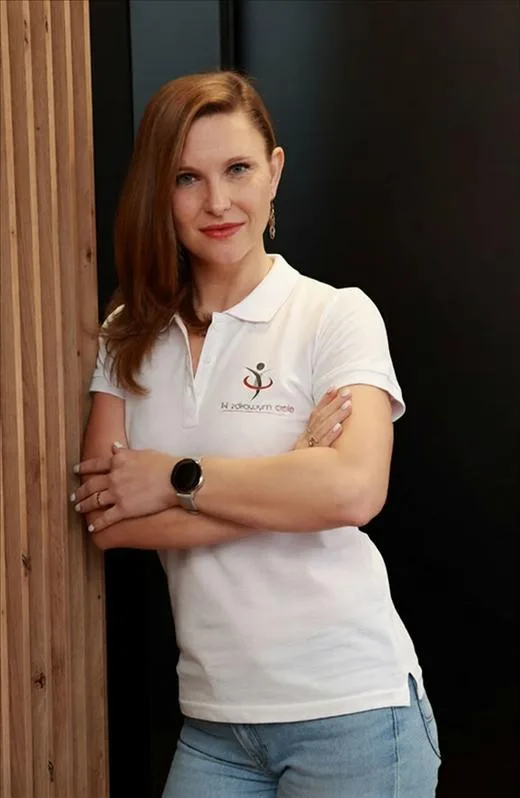
About the author: Tatiana Grabowska, MSc – master’s degree in physiotherapy, licence to practise number PWZFz 11646 (Polish physiotherapist licence). Since 2013 she has run the “W zdrowym ciele” physiotherapy and rehabilitation clinic in Rydułtowy; she has about 12 years of professional experience.
- Consultation180 PLN
- Referralnot needed
- ReceptionMon–Fri: 7.00–20.00
Google: 4.9ZnanyLekarz: 5.0 Booksy: 4.9197 patient reviews