
Therapy for a scar after surgery starts only once the wound has completely healed: the stitches or staples have been removed, there are no scabs, no oozing and no redness, and your doctor sees no contraindications. Until then, protecting the wound is enough. A scar remodels for as long as 12–18 months, so therapy still makes sense many months after the operation.
Below we explain how to tell that a scar is ready to be worked on, when to see a doctor first, how to care for it at home and what scar therapy with a physiotherapist involves.
In brief
- A scar usually matures and remodels for 12–18 months after surgery.
- Therapy starts once the wound has healed and with the doctor’s approval – never on an open wound.
- Redness, warmth, discharge or a fever are a signal for an urgent visit to a doctor, not for massage.
- Scar therapy in Rydułtowy costs 180 PLN – for both fresh and long-standing scars.
- The clinic is open Mon–Fri 7:00–20:00, private visits only (not covered by NFZ, the Polish public health fund), no referral needed.
Contents
When is a scar ready for therapy?
A scar is ready for therapy when the skin along the whole length of the incision is closed, dry and free of scabs, the stitches have been removed, and the area is not red, hot or swollen. It is always worth confirming when to start with your surgeon or doctor, especially after spinal surgery, a joint replacement or an abdominal operation.
Therapy applies to scars after various procedures: after knee arthroscopy and knee replacement, after hip replacement, after spinal surgery, after abdominal operations, e.g. for a hernia or appendicitis, and after surgical fixation of a fracture. The principles are similar, but the pace depends on the type of operation and how the wound heals. We write more about getting back to full function on the page rehabilitation after an injury or surgery.
When should you see a doctor first?
Do not start therapy, and contact a doctor, if the scar is red, hot or swollen, if fluid or pus is oozing from it, if the wound is opening up, if the pain is getting worse instead of easing or if you have a fever. Sudden swelling and pain in the calf after surgery, and a scar that grows quickly beyond the edges of the incision, also need urgent assessment.
Signs of a wound infection or a blood clot (thrombosis) need urgent medical assessment. A hypertrophic scar or a keloid is a matter for a doctor, who may prescribe treatment, and physiotherapy is then only a complement to it.
Why does a surgical scar harden and limit movement?
A scar is connective tissue that replaces the cut skin and the deeper tissues. The collagen fibres in it are arranged less elastically than in healthy skin and can become stuck to the layers underneath. The scar then becomes hard, pulls when you move, can be hypersensitive to touch and, in some people, limits how far a joint can bend.
After knee surgery a stiff scar can make it hard to bend the knee fully, after spinal surgery – to bend forward, and after abdominal surgery – to straighten the trunk. Scar remodelling takes many months, so gentle, regular work with the tissue makes sense even when the scar healed long ago.
How to care for a scar yourself, step by step?
Once your doctor agrees, start with gentle touch and moisturising the skin around the scar, then move the skin in different directions, and finally work directly on the scar. Do this 1–2 times a day for a few minutes, with clean hands and without pain. Protect the scar from the sun, and ideally practise the technique with a physiotherapist first.
- Getting used to touch. Gently touch the skin around the scar with your fingertips or a soft cloth until the touch no longer feels unpleasant.
- Moisturising. Rub a neutral cream or lotion into the skin around the scar with circular movements.
- Moving the skin. Place 2–3 fingers next to the scar and move the skin up, down and sideways, 5–10 times in each direction.
- Working on the scar. When the previous steps feel comfortable, move the scar itself over the underlying tissue in the same way.
- Movement. Do the exercises recommended after your operation – moving the joint also stretches the scar.
If the pain gets worse or the scar becomes red and warm, stop the exercise and consult a physiotherapist.
What does scar therapy with a physiotherapist involve?
The physiotherapist assesses how well the scar moves over the tissues underneath, how sensitive it is and how it affects movement in the joint or trunk. They then use manual techniques on the skin, fascia and deeper tissues, use kinesio taping if needed and teach the patient self-treatment. A consultation makes it possible to match a safe scope of work to the type of operation and the stage of healing.
Scar therapymanual work with fresh and long-standing scars, learning self-treatment180 PLNPrices valid from 08.2026. The physiotherapist decides on the number of visits individually after the consultation. We write about tapes that are also used on scars in our post kinesio taping – do the tapes really work.
What to avoid with a fresh scar?
Do not massage a wound that has not fully healed, do not pick off scabs and do not apply oils or ointments to a fresh scar without your doctor’s approval. Avoid sunbathing and sunbeds, as a scar can easily darken permanently. Do not stretch it forcefully and do not exercise through pain. Also avoid scratching, pressure from a belt and clothing that rubs.
Another common mistake is giving up the exercises recommended after surgery – we describe a sample plan after knee surgery in our post rehabilitation after knee replacement.
Good to know: bring your hospital discharge summary or the information sheet describing the operation to your first visit – it makes it easier to plan the therapy safely.
Summary
Scar therapy starts once the wound has fully healed and the doctor has given approval, with gentle touch and moving the skin rather than strong pressure. A scar remodels over many months, so working on it makes sense even after a long time. Redness, discharge or a fever are a reason for an urgent visit to a doctor.
Frequently asked questions
Is there still any point in treating an old scar?
Yes, therapy can also help with scars that are several years old if they are hard, pull when you move, are hypersensitive or limit the mobility of a joint or the trunk. The physiotherapist first assesses how far the scar is stuck to the tissues underneath. The outcome is individual and depends on the type of scar and how it affects movement.
Does scar therapy hurt?
Scar therapy should not cause severe pain. The patient may feel pulling, burning or an unpleasant sensation when touched, especially with a hypersensitive scar, but the pressure is adjusted continuously to how it feels. Pain that persists after the treatment or gets worse is a signal to reduce the intensity and talk to the physiotherapist.
Do silicone patches help with scars?
Silicone sheets and gels are often used to reduce the risk of a raised (hypertrophic) scar, and this use is supported by scar management guidelines. They are applied only once the wound has closed. It is best to decide on their use with a doctor, and manual therapy and self-treatment can be carried out alongside them.
Do I need a referral for scar therapy?
No, you do not need a referral for private scar therapy at the clinic in Rydułtowy. The clinic has no contract with the NFZ, and all visits are paid. Before starting therapy after surgery, however, it is worth getting confirmation from your surgeon or doctor that the wound has healed and the scar can be worked on.
Sources
- Gold M.H. et al., Updated international clinical recommendations on scar management: part 2 – algorithms for scar prevention and treatment, Dermatologic Surgery, 2014.
- Monstrey S. et al., Updated scar management practical guidelines: non-invasive and invasive measures, Journal of Plastic, Reconstructive & Aesthetic Surgery, 2014.
- Shin T.M., Bordeaux J.S., The role of massage in scar management: a literature review, Dermatologic Surgery, 2012.
- Deflorin C. et al., Physical management of scar tissue: a systematic review and meta-analysis, Journal of Alternative and Complementary Medicine, 2020.
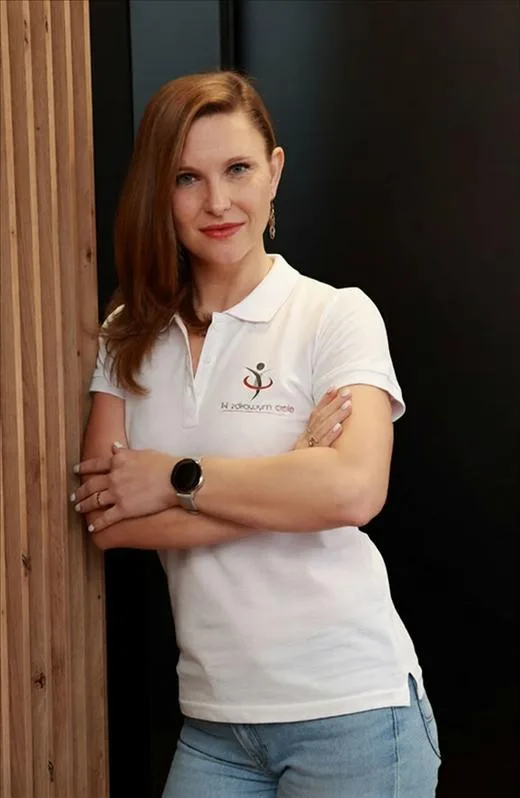
About the author: Tatiana Grabowska, MSc – master’s degree in physiotherapy, licence to practise number PWZFz 11646 (Polish physiotherapist licence). Since 2013 she has run the “W zdrowym ciele” physiotherapy and rehabilitation clinic in Rydułtowy; she has about 12 years of professional experience.
- Consultation180 PLN
- Referralnot needed
- ReceptionMon–Fri: 7.00–20.00
Google: 4.9ZnanyLekarz: 5.0 Booksy: 4.9197 patient reviews