
Manual therapy is treatment with the physiotherapist’s hands: joint mobilisation and manipulation, soft tissue techniques and nerve mobilisation, preceded by a thorough examination. It is used for pain in the spine, neck and peripheral joints. According to the 2016 NICE guidelines, for low back pain it should be part of treatment that includes exercise. In Rydułtowy a visit costs PLN 180.
Below we describe manual therapy techniques, situations in which it helps, contraindications, what you feel during a visit and how it is combined with other treatments.
In brief
- Manual therapy means examination and treatment through movement performed with the hands, not just “putting the spine back in place”.
- The NICE guidelines (2016) recommend it for low back pain only together with exercise.
- Manual therapy costs PLN 180; with TECAR PLN 210, with shockwave therapy PLN 200, with kinesio taping PLN 190.
- The clinic also uses the following approaches: the McKenzie method, the Dorn method and Cyriax orthopaedic medicine.
- The clinic in Rydułtowy is open Mon–Fri 7:00–20:00, private visits only (not covered by NFZ, the Polish public health fund).
Contents
Which techniques does manual therapy include?
Manual therapy includes mobilisation, i.e. slow, rhythmic movements in a joint with a chosen force; manipulation, i.e. a single, quick movement of small range; soft tissue techniques such as muscle and fascia release; and mobilisation of the nervous system. The physiotherapist chooses the set of techniques according to the examination findings, not the name of the condition.
Every visit starts with a medical history and an examination of the movements that trigger or reduce the pain. After each technique the physiotherapist reassesses the movement to check whether it has made a difference. At the “W zdrowym ciele” clinic, manual therapy also includes the approaches described in our articles on the McKenzie method, the Dorn method and Cyriax orthopaedic medicine.
When does manual therapy help and what does research say?
Manual therapy is used for low back and neck pain, headaches originating from the neck, limited joint mobility, e.g. of the shoulder, hip or knee, after immobilisation and after injuries. Research points to a small or moderate improvement, usually short-term, best documented in combination with exercise. Manual therapy on its own, without the patient’s active involvement, is rarely enough.
The NICE guidelines on low back pain and sciatica (NG59) recommend considering manual techniques only as part of a programme that includes exercise, and the 2017 JOSPT guidelines on neck pain – in combination with exercise. That is why the therapist always chooses exercises for home as well. We write more about back pain in our guide to back pain.
When is manual therapy not recommended?
Manual therapy, especially manipulation, is not performed near a recent fracture, with advanced osteoporosis, metastases or active cancer in the area, joint or bone infection, joint instability, acute arthritis, or with signs of compression of the spinal cord or nerve roots with increasing weakness. Anticoagulant medicines require caution.
Full list of contraindications:
- a recent fracture or suspected fracture in the area being treated;
- advanced osteoporosis;
- cancer or metastases in the area being treated;
- joint or bone infection, fever;
- joint instability, including of the cervical spine (e.g. in rheumatoid arthritis or Down syndrome);
- acute inflammation of a joint;
- signs of spinal cord compression, cauda equina syndrome, progressive weakness or numbness;
- signs of carotid or vertebral artery insufficiency (dizziness, problems with vision, speech or swallowing) – for techniques on the neck;
- anticoagulant treatment and blood clotting disorders – especially with manipulation;
- recent surgery in the area being treated – according to the doctor’s recommendations.
With warning signs such as numbness in the groin area, problems passing urine or a sudden, severe headache, you need to see a doctor first.
What do you feel during manual therapy?
During manual therapy you feel pressure, stretching and movement in the joint, sometimes brief discomfort in the painful spot. During manipulation there may be a characteristic “click”, which does not mean the joint has been “put back in place”. After the visit the area may be temporarily tender, but you can usually return to everyday activities straight away. The physiotherapist adjusts the force of the techniques to the patient’s tolerance.
For the visit it is worth wearing comfortable clothing that lets you uncover the area being treated, e.g. a T-shirt and shorts. The patient can always ask for a particular technique to be left out, e.g. manipulation – there are gentler techniques with a similar aim.
What is manual therapy combined with?
Manual therapy is most often combined with exercise, and as a supplement with physical therapy treatments. At the “W zdrowym ciele” clinic in Rydułtowy manual therapy on its own costs PLN 180, combined with TECAR PLN 210, with shockwave therapy PLN 200, and with kinesio taping PLN 190. The physiotherapist decides on the type of combination and the number of visits individually after the examination.
Manual therapyfor spinal, neck and joint pain and limited mobility180 PLNManual therapy + TECARwhen warming the tissues is meant to make muscle relaxation and mobilisation easier210 PLNPrices valid from 08.2026. Manual therapy can also be provided as part of home physiotherapy within 15 km of Rydułtowy: approximately PLN 200 for up to 5 km, then + PLN 2/km; we agree the exact price when booking.
Good to know: for your first visit, bring imaging results (X-ray, MRI), a list of your medicines and information about any previous operations.
Summary
Manual therapy is examination and treatment with the physiotherapist’s hands – mobilisation, manipulation and soft tissue techniques – best documented in combination with exercise. In Rydułtowy it costs PLN 180, and combined with TECAR, shockwave therapy or kinesio taping PLN 190–210.
Frequently asked questions
How is manual therapy different from massage?
Massage works mainly on the muscles and soft tissues, and its aim is relaxation and better circulation. Manual therapy starts with an examination and also includes techniques for the joints and nerves, chosen according to the specific cause of the pain. The physiotherapist assesses the effect during the visit and combines the therapy with exercise.
How is manual therapy different from chiropractic?
Both fields use manual techniques, including manipulation. In Poland manual therapy is provided by a physiotherapist – a medical profession regulated by law, with a licence to practise number. The physiotherapist combines manual techniques with exercise and education, and uses manipulation only when the examination indicates it and there are no contraindications. More: chiropractic or manual therapy.
Is joint “cracking” necessary?
No. The characteristic sound during manipulation is a gas phenomenon in the joint fluid and does not mean a vertebra has been “put back in place” or that the treatment has worked. Many techniques, e.g. mobilisation, make no sound at all and can have a similar effect. If you do not want manipulation, tell the physiotherapist.
How many manual therapy visits are needed?
The physiotherapist decides on the number of visits individually after the consultation. It depends on the type of problem and how long it has lasted, the examination findings and your response to the first visits. After each visit, the change in pain and movement is assessed. If there is no improvement, the physiotherapist changes the plan or refers you to a doctor for further tests.
Do I need to exercise after manual therapy?
Yes, exercise is an important part of treatment, because it consolidates the effect of manual therapy and reduces the risk of recurrence. The physiotherapist usually recommends a few simple exercises to do at home, with dosage suited to your problem. If an exercise makes the pain worse or causes it to spread, it is worth discussing this at your next visit.
Do I need a referral for manual therapy?
For a private visit at the “W zdrowym ciele” clinic a referral is usually not required. The clinic has no contract with the NFZ (the Polish public health fund), and manual therapy costs PLN 180. Before the first session the physiotherapist takes a medical history and carries out an examination to rule out contraindications and symptoms that require a medical consultation.
Sources
- NICE, Low back pain and sciatica in over 16s: assessment and management (NG59), 2016, updated 2020.
- Blanpied P.R. et al., Neck Pain: Revision 2017. Clinical Practice Guidelines, Journal of Orthopaedic & Sports Physical Therapy, 2017.
- Rushton A. et al., International framework for examination of the cervical region for potential of vascular pathologies of the neck prior to musculoskeletal intervention: International IFOMPT Cervical Framework, JOSPT, 2023.
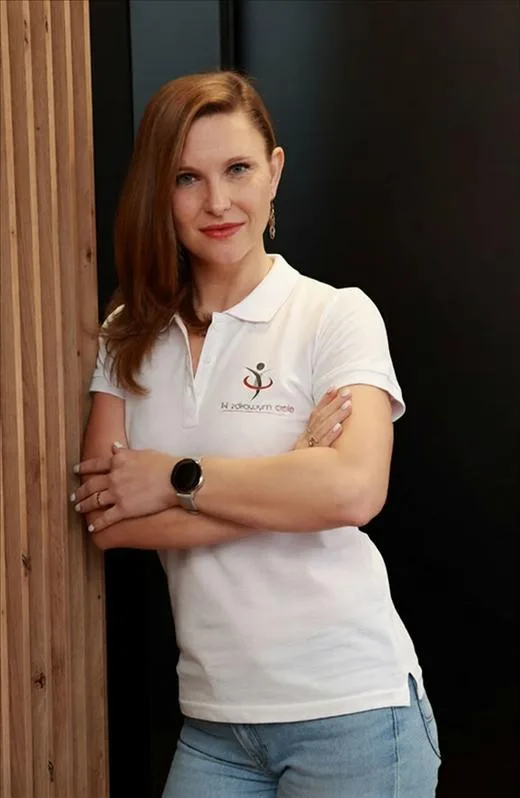
About the author: Tatiana Grabowska, MSc – master’s degree in physiotherapy, licence to practise number PWZFz 11646 (Polish licence to practise as a physiotherapist). Since 2013 she has run the “W zdrowym ciele” physiotherapy and rehabilitation clinic in Rydułtowy; she has about 12 years of professional experience. Physiotherapist’s profile
- Consultation180 PLN
- Referralnot needed
- ReceptionMon–Fri: 7.00–20.00