
To protect the shoulder after a stroke, the affected arm must always be supported: on a pillow in bed, on a tray or armrest in a wheelchair and on a chair. Never pull the person by this arm or lift them under the armpits. Move the arm slowly, without pain and no higher than the shoulder allows. A painful shoulder affects as many as one in three people after a stroke.
Below: where shoulder pain comes from, when to see a doctor first, how to support and position the arm, and carers’ most common mistakes.
In brief
- Shoulder pain on the weak side affects about 1 in 3 people after a stroke.
- The most important rule: the affected arm is always supported – in bed, in the wheelchair and during transfers.
- Never pull on the affected arm or lift the person under the armpits.
- Home physiotherapy within 15 km of Rydułtowy: approximately approx. 200 PLN for up to 5 km, then + PLN 2/km.
- The clinic is open Mon–Fri 7:00–20:00, private visits only (not covered by NFZ, the Polish public health fund).
Contents
Why does the shoulder hurt after a stroke?
After a stroke, the muscles around the shoulder are weakened or overly tense, so they no longer hold the head of the upper arm bone in the joint. The weight of the hanging arm stretches the joint capsule and can lead to shoulder subluxation. Pain is also made worse by pulling on the arm, too large a range of movement, spasticity, swelling of the hand and reduced sensation, which means the person does not protect the arm.
Subluxation is often visible as a dip below the bony point of the shoulder (acromion). A painful shoulder makes dressing, sleep and exercise difficult, which is why the arm is protected from the first days after a stroke. We write about the stages of recovery in our guide to rehabilitation after a stroke.
When should you see a doctor first?
Contact a doctor if the shoulder pain has suddenly become worse, appeared after a fall or a knock, the shoulder looks deformed, the hand is very swollen, red and hot, or the pain prevents sleep despite medication. Call 112 if there is new weakness, speech problems, a drooping corner of the mouth or chest pain spreading to the shoulder.
Severe pain with swelling of the hand and a change in skin colour may indicate complex regional pain syndrome (CRPS), which requires medical treatment. Medicines, injections and a shoulder ultrasound scan are decided by a doctor. In the Recommended specialists section we list a neurologist, Radosław Bienek, MD, PhD – he sees patients independently of the clinic, with his own booking line.
How to support the affected arm every day?
The affected arm should not hang down for more than a moment. When the person is sitting, the forearm rests on a table, an armrest or a pillow on the lap, with the hand open. During transfers and walking, the carer stands on the weak side and supports the arm from underneath, under the elbow and forearm. Use a sling only if a physiotherapist or doctor recommends it.
- Check the arm’s position. A person with reduced sensation will not notice that the arm has slipped off the armrest.
- Support from underneath. One hand under the elbow, the other under the wrist – never by the hand or fingers.
- Dress the affected side first. Slide the sleeve over the arm rather than pulling the arm through the sleeve; undress the healthy side first.
- When washing, raise the arm only to a height that does not cause pain.
If a movement causes shoulder pain, stop it and consult a physiotherapist.
How to position the arm in bed and in a wheelchair?
When the person is lying on their back, place a flat pillow under the shoulder and the whole arm so that the elbow is slightly away from the body and the hand is open. When lying on the healthy side, the affected arm rests in front on a pillow. When lying on the affected side, bring the shoulder slightly forward so the person is not lying on the joint. In a wheelchair, the forearm rests on a tray or a wide armrest.
A wheelchair tray or an armrest with a support makes it easier to keep the arm in place all day – it is worth choosing the equipment with a physiotherapist. We describe how to prepare the home and the family for exercise in our article home physiotherapy after a stroke.
What not to do with the affected arm?
Do not pull the person by the affected arm when helping them sit up, stand up or reposition in bed, and do not lift them under the armpits. Do not let the arm hang down from the bed or wheelchair. Do not raise it sharply above the head, do not use overhead pulleys, do not exercise through pain and do not put the person’s arm around your neck during transfers.
A tight sling worn all day is also a mistake, because it fixes the elbow in a bent position and the arm pulled in towards the body. Guidelines list overhead pulley exercises as a factor contributing to shoulder pain.
How does a physiotherapist help?
The physiotherapist assesses the shoulder, range of movement, muscle tone and any subluxation, and then chooses safe exercises, positioning and ways of supporting the arm. They also teach the carer how to hold the person during transfers, dressing and washing, using the person’s own bed and wheelchair. If needed, they use kinesio taping or advise on choosing a support and a sling.
The scope of neurological therapy is described on the page rehabilitation after a stroke and in neurological conditions. The physiotherapist decides on the number of visits individually after the assessment.
Home physiotherapyshoulder assessment, arm positioning and guidance for the carer in the person's home, within 15 km of Rydułtowyapproximately PLN 200 for up to 5 km, then + PLN 2/km; we agree the exact price when bookingGood to know: before discharge from hospital, ask the ward physiotherapist to show you how to position the arm in bed and in the wheelchair – it will be easier to repeat this at home.
Summary
A painful shoulder affects as many as one in three people after a stroke, but many everyday mistakes can be avoided. The affected arm should always be supported, held from underneath and moved only within a pain-free range. Sudden pain, swelling of the hand or pain after a fall needs to be assessed by a doctor.
Frequently asked questions
Does a sling protect the shoulder after a stroke?
A sling can briefly take the load off the shoulder, e.g. while walking or transferring, but worn all day it fixes the elbow in a bent position and limits use of the arm. Research results on the effectiveness of slings are mixed. Whether and when to wear one is best decided with a physiotherapist or the treating doctor.
Does kinesio taping help with a painful shoulder after a stroke?
Kinesio taping is sometimes used as an addition to therapy to improve awareness of the shoulder’s position and reduce discomfort. Evidence for its effectiveness for a painful shoulder after a stroke is limited, so it does not replace supporting the arm or exercise. The tape is applied by a physiotherapist, who also checks that the skin tolerates it well.
Can the person sleep on the side affected by the weakness?
Yes, lying on the affected side is usually acceptable and can be beneficial, because it stabilises the shoulder and increases sensation on that side of the body. The condition is that the shoulder is brought slightly forward so that the person is not lying directly on the joint. If the position causes pain, change it and consult a physiotherapist.
Will shoulder pain after a stroke go away on its own?
Not always. In some people the pain lessens as muscle strength and control improve, but in others it lasts a long time and makes rehabilitation difficult. That is why protecting the shoulder from the first days and an early assessment by a physiotherapist are so important. Increasing pain, swelling or pain at night need a consultation with a doctor.
Sources
- Anwer S., Alghadir A., Incidence, Prevalence, and Risk Factors of Hemiplegic Shoulder Pain: A Systematic Review, International Journal of Environmental Research and Public Health, 2020.
- Winstein C.J. et al., Guidelines for Adult Stroke Rehabilitation and Recovery (AHA/ASA), Stroke, 2016.
- Intercollegiate Stroke Working Party, National Clinical Guideline for Stroke for the UK and Ireland, 2023.
- Ada L., Foongchomcheay A., Canning C., Supportive devices for preventing and treating subluxation of the shoulder after stroke, Cochrane Database of Systematic Reviews, 2005.
- National Institute for Health and Care Excellence (NICE), Stroke rehabilitation in adults (NG236), 2023.
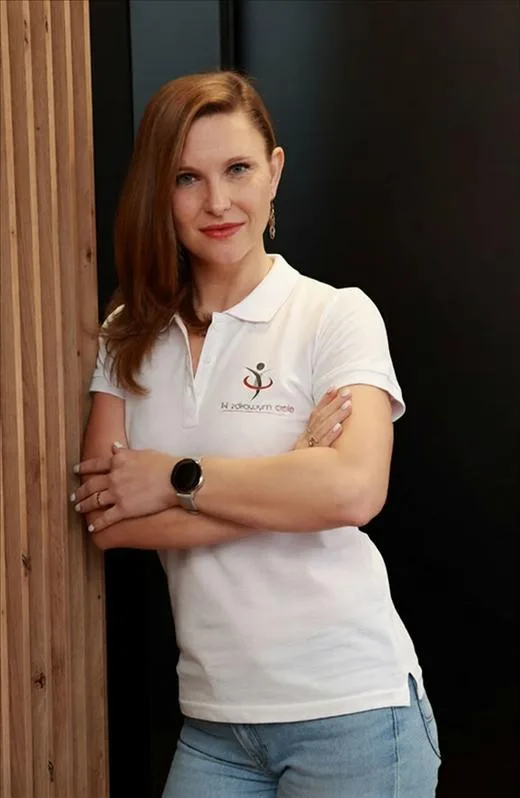
About the author: Tatiana Grabowska, MSc – master’s degree in physiotherapy, licence to practise number PWZFz 11646 (Polish licence to practise as a physiotherapist). Since 2013 she has run the “W zdrowym ciele” physiotherapy and rehabilitation clinic in Rydułtowy; she has about 12 years of professional experience and works, among other approaches, with the IBITA Bobath concept.
- Consultation180 PLN
- Referralnot needed
- ReceptionMon–Fri: 7.00–20.00